
Carole Yvonne Johnson
Dancer | Choreographer | Founder of NAISDA
Carole Yvonne Johnson (b. 1940) is an African American contemporary dancer, choreographer, and cultural visionary whose international legacy reshaped the landscape of Indigenous dance in Australia. A powerful force in modern dance, Johnson’s work bridges African diasporic movement traditions, political expression, and community-centered arts leadership.
Early in her career, Johnson rose to prominence as a lead dancer with the Eleo Pomare Dance Company, where the politically charged choreography of founder Eleo Pomare profoundly influenced her artistic voice. Pomare’s bold integration of social justice themes into modern dance helped shape Johnson’s commitment to movement as a vehicle for cultural affirmation and resistance.
In 1972, during a tour of Australia with the Eleo Pomare Dance Company, Johnson’s engagement with Aboriginal and Torres Strait Islander communities marked a turning point in her life and in Australian dance history. Recognizing both the extraordinary cultural wealth and the structural barriers facing Indigenous artists, she became instrumental in founding the National Aboriginal Islander Skills Development Association (NAISDA) in 1976—the first professional performing arts training institution for Aboriginal and Torres Strait Islander peoples.
Her visionary leadership later contributed to the co-founding of Bangarra Dance Theatre, now one of Australia’s most internationally celebrated contemporary Indigenous dance companies. Through these institutions, Johnson helped establish sustainable pathways for Indigenous artists to train, create, and perform work grounded in cultural knowledge, sovereignty, and contemporary innovation.
Carole Yvonne Johnson’s legacy is one of transnational solidarity—an African American artist whose commitment to justice, artistic excellence, and cultural empowerment helped catalyze a renaissance in Indigenous Australian performance. Her work stands as a testament to the transformative power of dance as both art form and instrument of liberation.
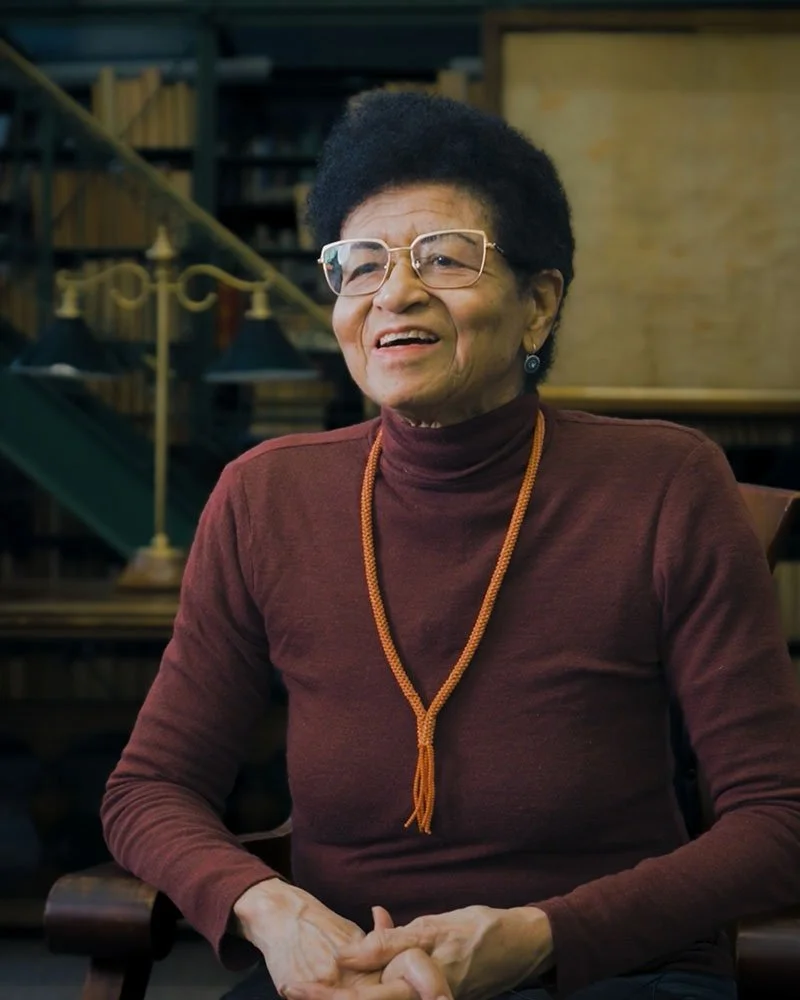
Interview Summary
Breaking Barriers: A Dancer's Journey of Resilience and Hope
Carol Johnson never let obstacles stop her from pursuing her dreams. Growing up in Philadelphia during the 1950s and 60s, she faced racial discrimination but transformed those challenges into a powerful mission of artistic expression and social change.
From a young age, Johnson knew she wanted to dance. As a child, she would save her pennies, skipping sodas to pay for extra dance classes. Her passion burned bright, even when society tried to dim her opportunities. When local swimming pools and dance studios refused to welcome Black children, her parents taught her a crucial lesson: stand up for yourself and fight for your rights.
Johnson's journey took her from Philadelphia to New York, where she became part of a groundbreaking group of Black dancers and choreographers. During the height of the Civil Rights Movement, she helped create the Association of Black Choreographers (ABC), an organization dedicated to showcasing Black artistic talent and telling powerful stories through dance.
"We wanted to make ourselves visible," Johnson explained. Her work wasn't just about dancing - it was about breaking down barriers and showing the world the beauty and strength of Black artists.
Her most ambitious project was the dance mobile, a massive undertaking that required incredible organizational skills. For 19 weeks, Johnson worked tirelessly, raising funds, designing stages, and even performing - often sleeping only two to three hours a night. Her determination embodied her father's advice: "Think ahead" and "There's always room at the top."
Johnson's story is more than a personal triumph. It's a testament to the power of perseverance, creativity, and believing in oneself. She faced racism, limited opportunities, and systemic barriers, yet she continued to dance, organize, and inspire.
Her message to young people remains powerful and simple: "Think positively, do things that make you and others feel good, and focus on joy."