
Margaret Bass
Higher Education Leader | Equity Strategist | Community Advocate
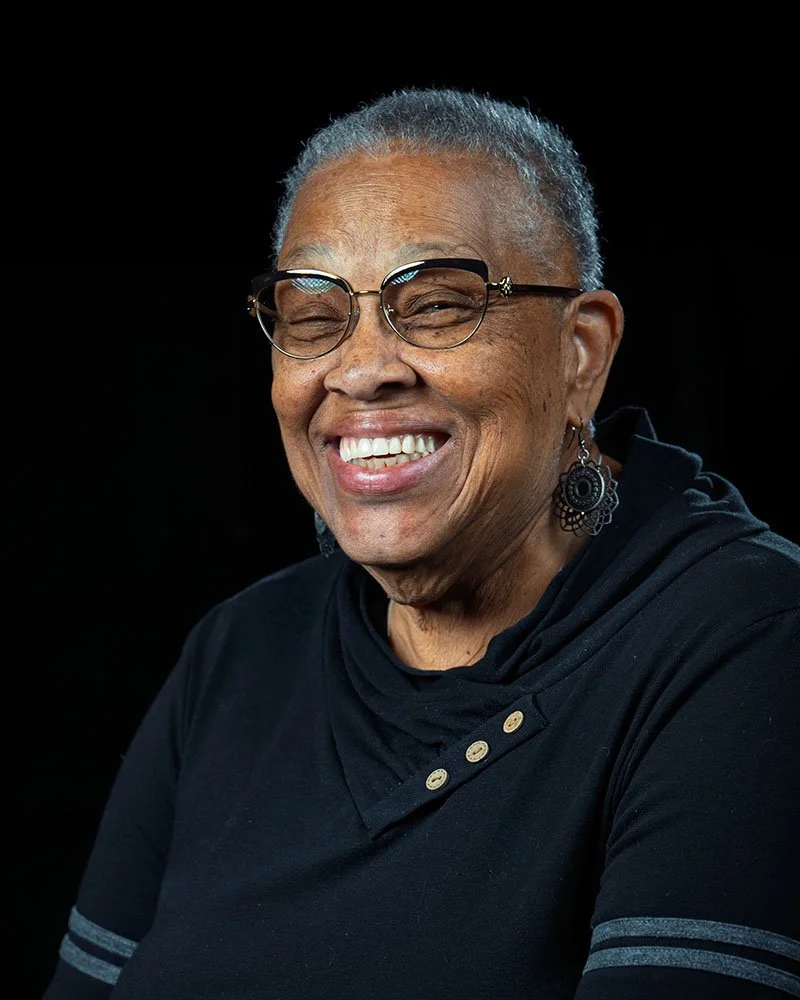
Dr. Margaret Bass, PhD, MA is a Vermont-based educator, academic leader, and community advocate whose career reflects a sustained commitment to equity, diversity, restorative practice, and educational excellence. With decades of experience spanning higher education, nonprofit leadership, and civic engagement, Dr. Bass has become a respected voice in advancing inclusive communities both on campus and throughout Vermont.
Dr. Bass currently serves as Special Assistant to the President for Diversity and Inclusion at St. Michael’s College, where she supports institutional strategies that cultivate belonging, inclusive excellence, and cross-cultural engagement. In this leadership role, she works collaboratively with faculty, students, and administrators to strengthen campus climate initiatives and deepen the college’s commitment to social justice and equity.
Prior to her work at St. Michael’s College, Dr. Bass built a distinguished academic and administrative career at St. Lawrence University. There, she served as Associate Professor of English, shaping generations of students through her scholarship and teaching. In addition to her faculty appointment, she assumed key administrative positions including Interim Dean of Students and Director of the Center for Diversity and Social Justice, providing strategic leadership during pivotal institutional transitions. Her work integrated intellectual rigor with student development, ensuring that academic life and student experience were deeply interconnected.
Dr. Bass’s commitment to justice extends beyond higher education into community-based service. She has served as a Restorative Justice Panel Manager for the City of Winooski, helping facilitate community-centered responses to conflict and harm. Through this work, she contributed to alternative justice models that emphasize accountability, healing, and restoration rather than punishment alone.
Her civic leadership also includes service as an elected member of the Winooski School District School Board, where she helped guide educational policy and governance decisions impacting local families and students. In this role, Dr. Bass demonstrated her enduring belief that equitable education is foundational to thriving communities.
In the nonprofit sector, Dr. Bass serves as a Director on the Board of Clemmons Family Farm, an organization dedicated to preserving Black agricultural heritage and fostering arts, education, and cultural programming. Her involvement supports initiatives that honor history while cultivating contemporary dialogue and creativity.
Dr. Bass’s academic preparation reflects both depth and interdisciplinary reach. She earned a Bachelor of Arts in English from Wilmington College, a Master of Education in Special Education from University of Mississippi, and a Doctor of Philosophy in English from Louisiana State University. This combination of literary scholarship and educational training has informed her holistic approach to leadership—one that bridges intellectual inquiry, institutional policy, and human development.
Across every role she has held—professor, dean, diversity leader, board member, restorative justice facilitator, and elected official—Dr. Margaret Bass has consistently centered dignity, equity, and transformative learning. Her career reflects a lifelong dedication to building institutions and communities where all individuals can thrive, contribute, and be fully seen.
Interview Summary
Breaking Barriers: A Lesson in Courage from Dr. Margaret Bass
In the heart of the Jim Crow South, a young girl named Margaret Bass learned a powerful lesson that would shape her entire life: dignity cannot be stolen, even when laws try to strip it away.
Growing up in the 1950s, Margaret and her brother faced a world designed to make them feel less than human. Segregation meant they couldn't play in certain parks, drink from certain water fountains, or even enter some libraries. But Margaret's parents taught her something revolutionary: injustice should never be accepted silently.
Her father, a Methodist minister, became a quiet hero of resistance. When a local library refused to serve Black children, he walked Margaret and her brother right into the white library's story hour. "We are here for story time," he told shocked librarians, challenging the racist rules that divided their community.
Margaret's mother played an equally crucial role. When her daughter asked why she couldn't play on a nearby park swing, her mother's response was transformative. "There's absolutely nothing wrong with you," she explained. "The problem is with the unfair laws, not with you."
These moments weren't just personal stories – they were lessons in courage. Margaret learned to stand up against injustice without hatred, to resist without becoming bitter. She and her brother would deliberately drink from "white" water fountains and challenge segregation's ridiculous rules, always with their parents' guidance.
"We need to understand our history," Margaret now says to young people. "Not to hold onto pain, but to recognize injustice when we see it."
Her message is clear: knowing history helps us build a better future. The courage of those who came before us shows us what's possible when ordinary people refuse to accept extraordinary wrongs.
Today, Dr. Margaret Bass continues to teach, sharing her experiences to ensure younger generations understand the power of dignity, education, and peaceful resistance. Her life is a testament to the truth that one person's courage can challenge an entire system of oppression.
In a world that still struggles with racism, Margaret Bass reminds us that change begins with understanding, compassion, and the unwavering belief in human dignity.