
Mark Hughes
Racial Justice Leader | Founder, Vermont Racial Justice Alliance | Veteran
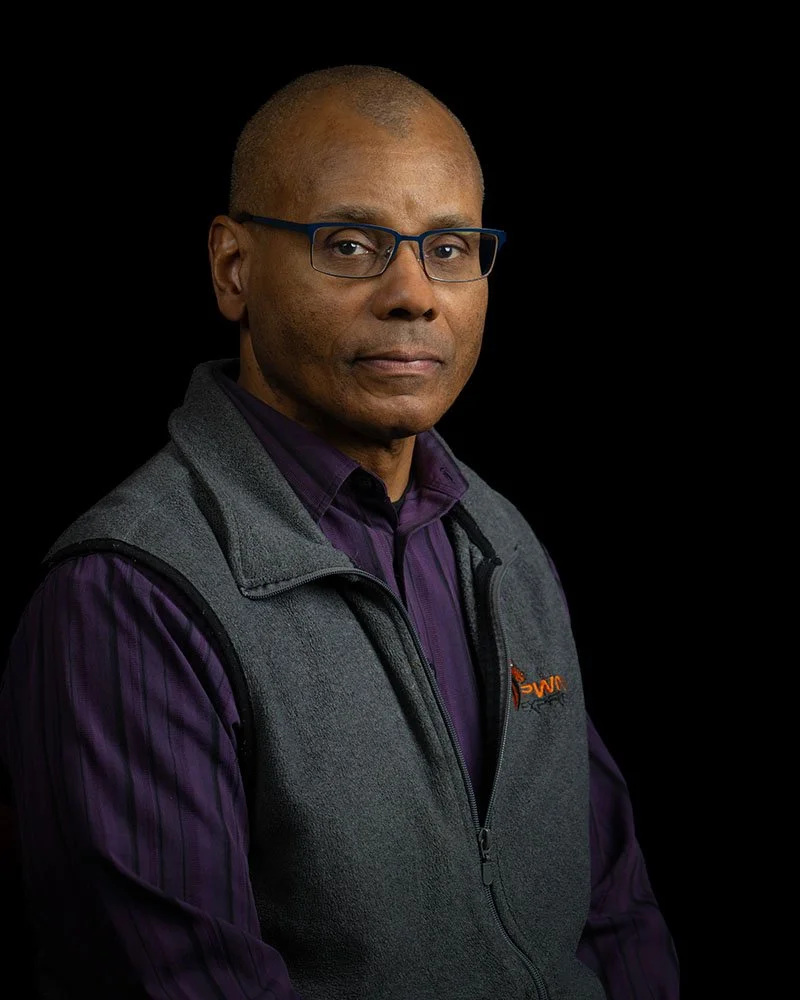
Reverend Mark Hughes is a Vermont-based racial justice leader, community organizer, military veteran, and public theologian whose work has profoundly shaped the state’s contemporary civil rights landscape. As Founder and Executive Director of the Vermont Racial Justice Alliance (VRJA) and Justice For All, Hughes has become one of the most influential architects of systemic equity reform in Vermont.
Originally from Iowa, Hughes served as a U.S. Army officer specializing in cryptography and cybersecurity before transitioning into full-time advocacy. His military career instilled strategic discipline, analytical precision, and a deep understanding of institutional systems—skills he now applies to dismantling structural inequities and advancing justice-centered policy reform.
Under his leadership, the Vermont Racial Justice Alliance has spearheaded major legislative efforts addressing systemic racism. Hughes played a central role in the passage of Act 54 (2017) and Act 9 (2018), landmark laws establishing state panels to examine racial disparities within Vermont’s criminal and juvenile justice systems and to confront systemic inequities across state institutions. His advocacy also contributed significantly to the successful 2022 amendment to the Vermont Constitution explicitly abolishing slavery—closing a historic loophole that had remained embedded in the state’s founding document.
Hughes has also served on the Burlington Police Commission, later resigning in 2020 in protest of limitations placed on civilian oversight and accountability mechanisms. His resignation underscored a core principle of his leadership: justice must be substantive, not symbolic. Beyond legislative work, Hughes oversees the Richard Kemp Center in Burlington, a hub for cultural empowerment, civic engagement, and community support. He also hosts “The Juxtaposition” on CCTV Center for Media & Democracy, where he engages audiences in dialogue around civil rights, demographic change, and structural reform. His annual leadership of Vermont’s First African Landing Day further reflects his commitment to historical truth-telling and the honoring of African American contributions.
As part of the Vibrant Lives Project, Reverend Mark Hughes represents the ongoing evolution of Black civic leadership in Vermont. His journey—from military officer to faith-rooted justice advocate—embodies disciplined conviction and moral clarity. His work stands at the intersection of policy, community mobilization, and historical reckoning, reminding us that vibrant lives are not only lived—they legislate, organize, testify, and transform.
Reverend Hughes continues to call Vermont toward deeper accountability and broader belonging, advancing a vision of justice that is structural, spiritual, and sustained.
Interview Summary
From Poverty to Purpose: Mark Hughes Shares His Journey for Justice
Mark Hughes’ story is not just about one man’s struggles—it’s a journey of hope, faith, and the fight for justice. Growing up poor in Waterloo, Iowa, Mark experienced hardships that many young people can’t imagine. “Every single month, in the mailbox was a social security check, a welfare check, and a package of food stamps,” he remembers. Life was tough. He moved around a lot, lived with roaches and mice, and sometimes made mistakes—like dropping out of high school and getting into trouble as a teenager.
But Mark’s story didn’t end there. Supported by his strong mother and grandmother, and his deep faith, Mark learned the most important lessons not in school, but in church and at home. “My mother instilled in me that it’s not enough just to survive,” he says. “You’re here so the overflow of your life can pour into the lives of people around you.” Guided by this belief, Mark joined the Army, worked hard, and eventually became an advocate for change.
After seeing the killing of Michael Brown on the news in 2014, Mark’s life changed direction. He started asking hard questions about fairness and justice. He researched policing and the criminal justice system, discovering that Black Americans often faced worse outcomes than others—not just in the courtroom, but in schools, housing, and jobs. This realization pushed him to take action.
Mark organized meetings, talked to police chiefs and mayors, and helped create new state policies in Vermont to fight systemic racism. He helped form Vermont’s Office of Racial Equity and worked to change unfair rules—even working to remove language supporting slavery from the state’s Constitution.
But what matters most to Mark is inspiring young people to support each other. His advice is simple: “Be true to your beliefs. Be true to everyone around you. Be true to yourself.” He urges youth to unite, stand up for one another, and build a better future—together.
Mark Hughes’ story shows that no matter where you start, you can make a difference. His message is clear: do right, help others, and create the world you want to see.